Traditional vending machines rely on fixed product slots and mechanical dispensing systems. AI-powered vending machines take a different approach, using cameras and computer vision to identify products automatically.
This technology is changing how unattended retail works, making shopping more convenient and giving operators greater flexibility.
How Does AI Product Recognition Work?
AI product recognition uses cameras and image recognition algorithms to identify items inside a vending machine.
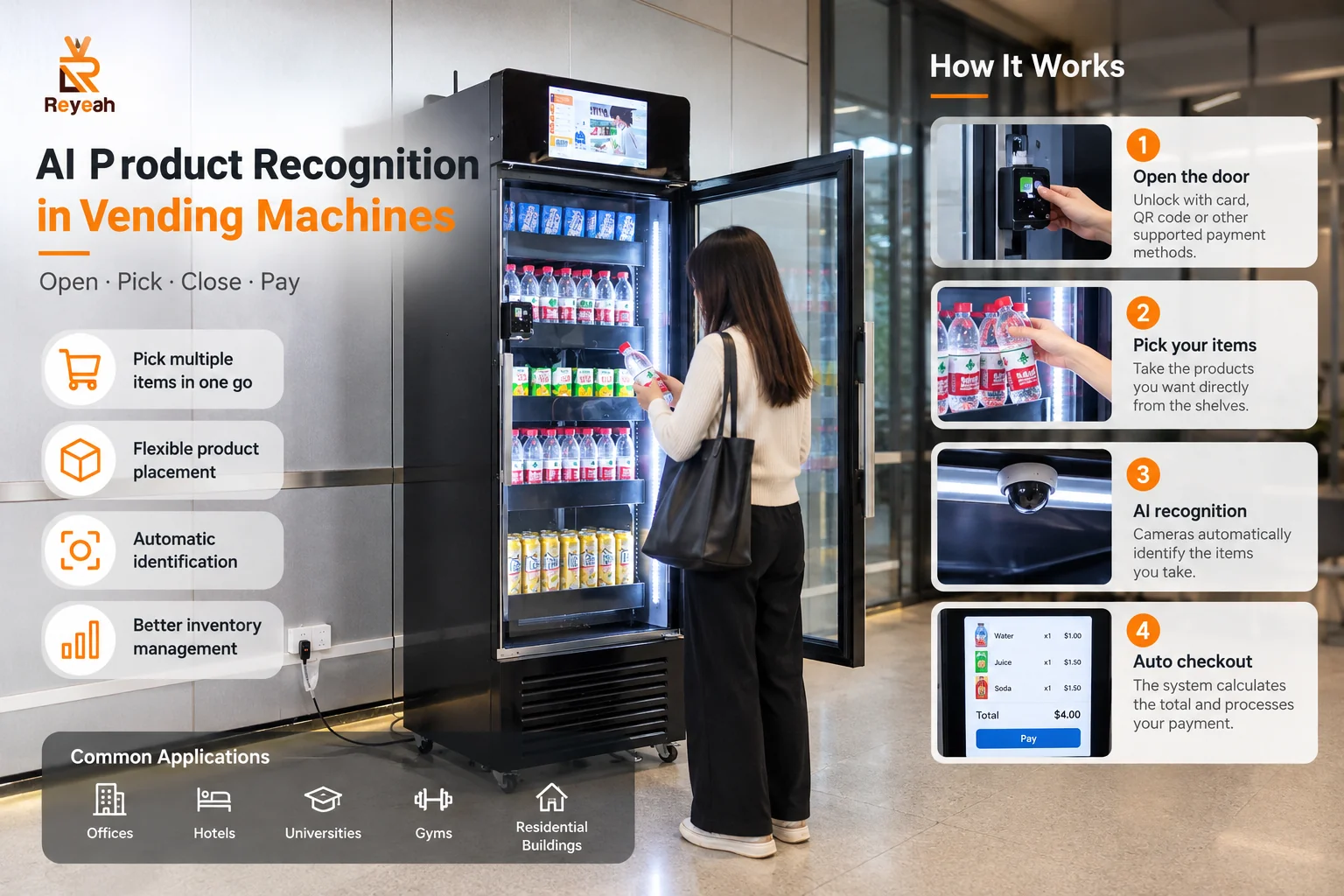
In a typical AI smart cooler, the process is simple:
- The customer unlocks the door using a supported payment method.
- Cameras monitor the products inside the cabinet.
- The customer selects the items they want and closes the door.
- The AI system analyzes product changes and determines which items were taken.
- The system calculates the total and processes the payment.
Unlike traditional spiral vending machines, AI smart coolers allow customers to pick up products directly from the shelves.
Key Benefits of AI Product Recognition
Faster Shopping Experience
Customers can take several items in a single transaction without selecting each product on a touchscreen.
Flexible Product Placement
AI vending machines can accommodate different product types and packaging sizes. Operators have more flexibility when arranging products, although supported items must be properly configured in the recognition system.
Reduced Manual Work
Automatic product identification helps reduce the need for manual product selection and checkout. Operators can also use connected management software to review sales and inventory information.
Better Product Tracking
When integrated with a vending management platform, AI recognition can help operators understand which products are selling and when restocking is needed.
Where Is AI Product Recognition Used?
AI product recognition is particularly useful in smart coolers and open-door vending machines.
Common applications include:
- Offices: Snacks, drinks, and ready-to-eat meals.
- Hotels: Beverages, convenience items, and personal care products.
- Universities: Snacks, packaged food, and daily essentials.
- Gyms: Protein drinks, energy drinks, and healthy snacks.
- Residential buildings: Everyday convenience products available around the clock.
These locations benefit from self-service shopping without requiring a staffed checkout counter.
What Should Operators Consider?
AI recognition accuracy depends on several factors, including camera placement, lighting, packaging appearance, and the quality of the trained recognition model.
Products with similar packaging can be more difficult to distinguish. New products may also require additional image data or model updates before they can be recognized reliably.
Operators should confirm supported product categories, recognition accuracy, network requirements, and procedures for handling incorrect transactions before purchasing equipment.
At Reyeah Technology, we explore intelligent vending solutions designed for modern retail environments.
Interested in AI-powered vending machines? Visit reyeah.com to learn more about our vending machine solutions and customization options.