A guest arriving late may need a toothbrush, a charging cable or a bottle of water long after nearby shops have closed. Small vending machines for hotels and guesthouses can make those essentials available without adding a staffed shop. The right setup starts with what guests need and how the property will keep it stocked.
For a compact property, floor space is only part of the decision. A machine must also suit the products, accept practical payment methods and fit into the daily work of reception or housekeeping. A small cabinet that needs constant refilling may be less useful than a slightly larger one with a better product layout.
Start with the requests your guests already make
Before choosing a machine, record the items guests ask reception for over several representative weeks. Separate items the property provides free from products guests would reasonably expect to purchase. Selling an amenity already included in the room rate can create confusion unless the distinction is clear.
A guesthouse with limited reception hours may prioritize forgotten travel essentials. A business hotel may see more demand for charging accessories, while a property serving families may find snacks and drinks more relevant. Use your own requests and sales records to shape the first assortment.
Choose a focused opening range
- Personal care: sealed dental kits, combs, sanitary products and other small travel essentials.
- Travel accessories: clearly labeled charging cables, eye masks and earplugs. Identify connector types and compatibility before payment.
- Packaged snacks: products with legible ingredient, allergen and expiry information that suit the machine’s storage conditions.
- Drinks: bottles or cans that have been tested in the proposed dispensing mechanism, with refrigeration where the product requires it.
Package size, weight and shape matter as much as the product category. A soft pouch can fold into a gap; a narrow box may rotate during release. Ask the supplier to test the exact retail packaging, including a full channel and the last item remaining.
Compare countertop, wall-mounted and compact floor-standing machines
Small vending machines for hotels and guesthouses come in several formats. Choose the format after deciding what to sell, where guests will use it and who will refill it.
| Format | Possible hotel location | What to check |
|---|---|---|
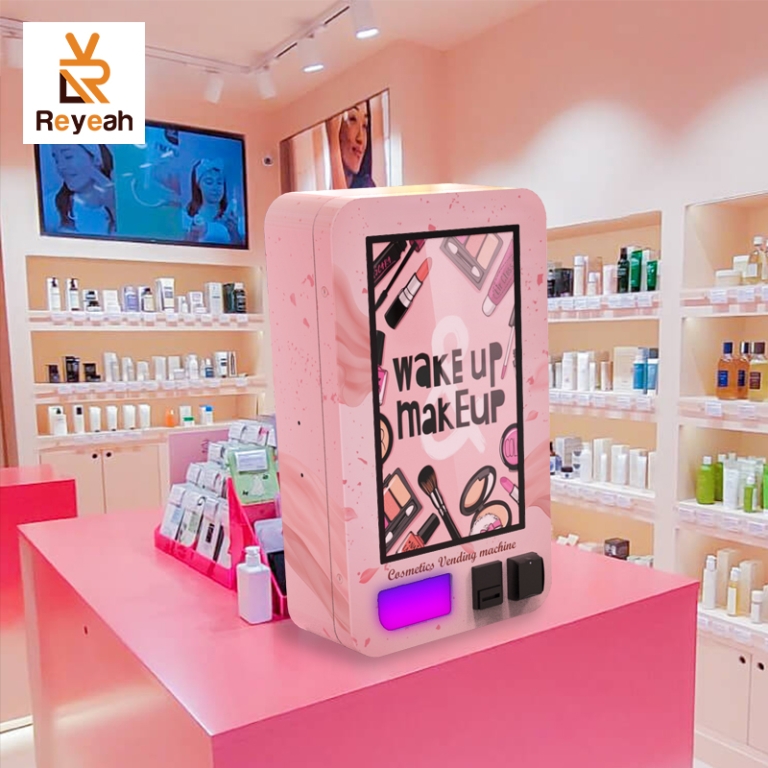
| Countertop | A reception counter or a dedicated lobby cabinet | Counter load capacity, stability, usable work space and guest reach |
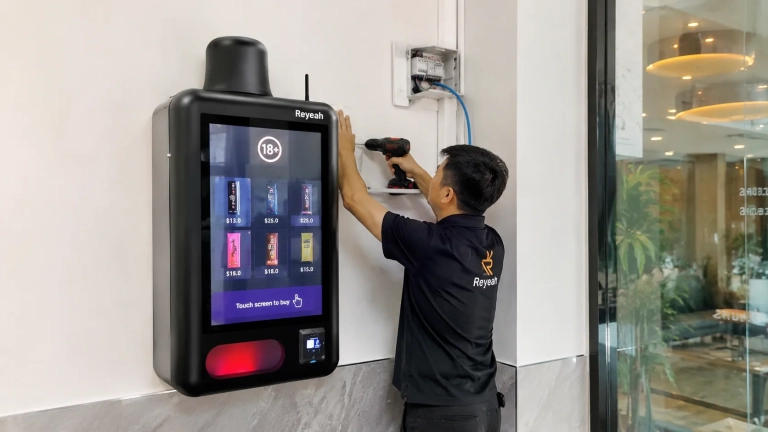
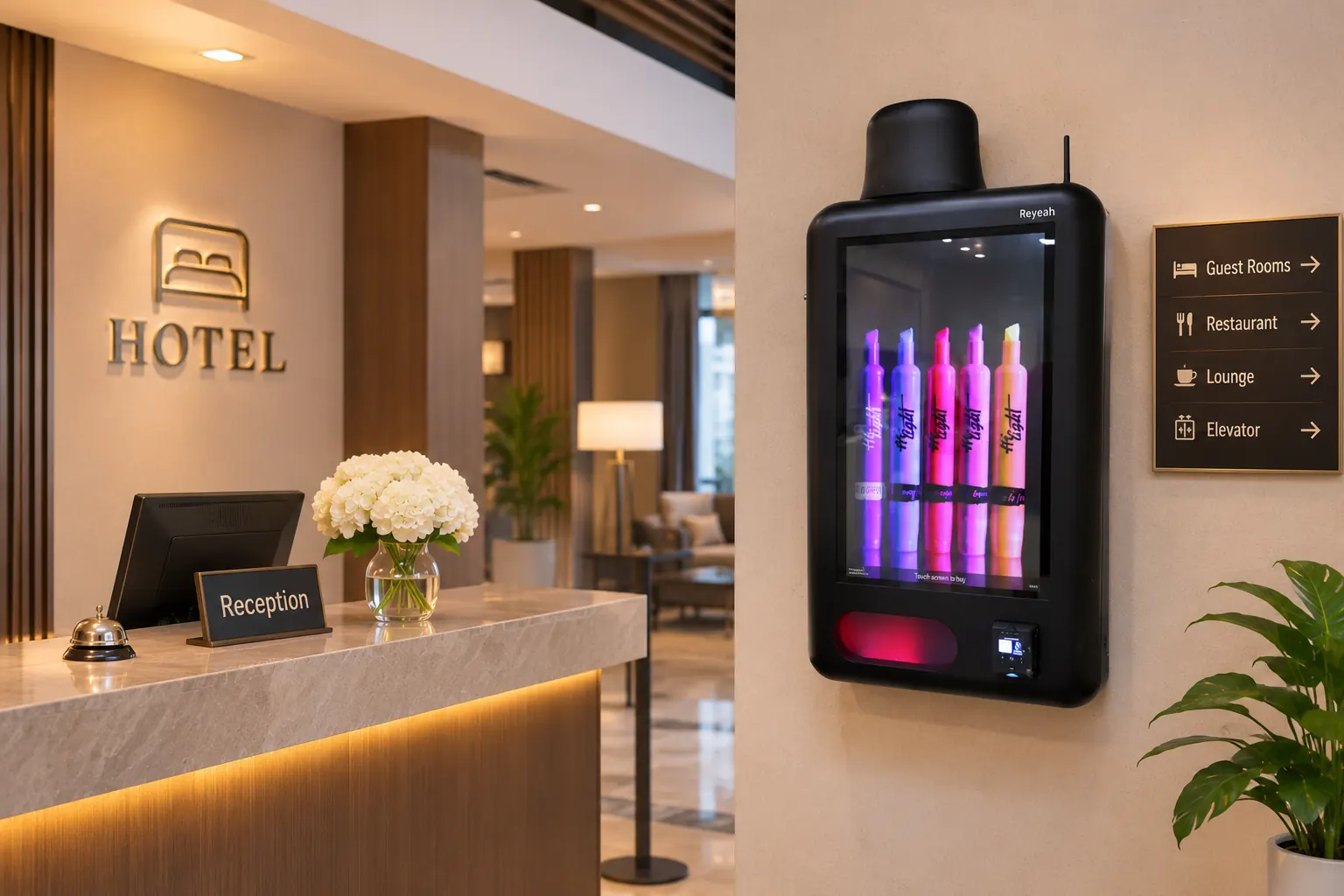
| Wall-mounted | A lobby wall or shared guest area | Wall construction, fixing requirements, service clearance and collection height |
| Compact floor-standing | A lobby corner or designated refreshment area | Floor footprint, door swing, delivery route, stability and any ventilation clearance |
Explore Reyeah’s countertop vending machine options and wall-mounted vending machine solutions as starting formats. Confirm the final dimensions, usable capacity and available functions for the specific configuration quoted.
Decide whether refrigeration is necessary
A machine for cables and sealed toiletries has different storage needs from one selling chilled refreshments. Refrigeration affects cabinet design, electricity use, heat output and maintenance. Do not assume that a compact machine can keep products cold simply because it can dispense them.
Ask for the operating temperature range, installation requirements and energy information for the proposed model. If it will sit near guest rooms, request noise information and assess an operating unit where possible.
Put the machine where guests can find and use it
A visible position near reception can help guests discover the service. In a property with self check-in, include the location in arrival instructions and place a simple sign where guests enter. A machine behind a locked door is of little help after reception closes.
Measure the delivery route, including entrance doors, stairs, lifts and tight corners. At the final position, allow room for guests to select and collect products, and for staff to open the machine and replenish it. Keep required circulation routes clear and check applicable local installation and accessibility requirements.
Consider the surrounding space during a typical late arrival. Can a guest use the screen while carrying luggage? Is the collection tray easy to see? Will machine lighting or operating noise disturb nearby rooms? These details can matter more than a prominent screen.
Make payment and product selection clear
Display the price, quantity and product variant before payment. Use photographs of the actual items, and distinguish similar cable connectors or personal care pack sizes. For international guests, consider the languages needed throughout the purchase sequence, including payment errors and collection instructions.
Confirm card and mobile payment support for the destination country with the supplier and payment provider. Ask about merchant registration, settlement currency, transaction charges, connectivity and recurring fees. A supported payment terminal does not automatically mean every guest’s preferred payment method will work.
Build restocking into the property’s routine
Assign a named person or team to check stock, clean the collection area and respond to faults. If housekeeping will refill the machine, choose a time and location for spare stock that fit their existing work. Store the key securely and train a backup operator.
Set initial refill checks conservatively, then adjust them using actual sales. Review fast-selling items, slow stock, damaged packages and expiry dates. Rotate stock so earlier expiry dates are sold first, and retest dispensing whenever a supplier changes the packaging.
If remote stock reporting is included, ask how it works: calculated sales counts, sensors and manual entries have different limitations. Demonstrate stock corrections and alerts rather than assuming the dashboard always reflects the physical contents.
Evaluate costs using realistic demand
Compare the installed cost and ongoing workload as well as the purchase price. Include freight, installation, payment equipment, starting stock, software subscriptions, connectivity, electricity, cleaning, refill labor and maintenance. Confirm which costs are included in the quotation.
For planning, estimate the contribution per sale by subtracting product cost and variable selling costs from the selling price. Multiply that figure by expected monthly transactions, then subtract recurring operating costs. Use the result to assess whether the investment is plausible under quieter as well as busier trading conditions.
Occupancy alone does not establish demand: many guests will never buy an item. A pilot with one machine can show which products sell, how often staff need to refill it and whether the chosen position works. Avoid committing several properties to the same setup before reviewing those results.
Questions to ask before ordering
- Can the supplier demonstrate reliable dispensing with our exact product samples?
- What are the installed dimensions, refill clearances and site requirements?
- Which payment methods and interface languages are included for our country?
- What happens after a failed vend, network interruption or power outage?
- Which software, connectivity and support charges recur after purchase?
- What warranty, spare parts, training and service documentation are provided?
Frequently asked questions
Can a small guesthouse use a vending machine?
Yes, provided the product range, available space and expected demand support it. A small assortment of forgotten essentials may be a sensible starting point. Check the refill workload and total operating costs before choosing capacity.
Can one machine sell snacks and toiletries?
Possibly, if the configuration supports each package and the products share suitable storage conditions. Ask for testing with the complete assortment. Follow product storage instructions and avoid loading goods that could leak or contaminate nearby stock.
Can guests buy items when reception is closed?
Yes, if the machine remains accessible, powered, stocked and connected as required by its payment system. Provide clear instructions for failed purchases and explain when assistance will be available.
Plan a vending setup around your property
The best small vending machine for a hotel or guesthouse is one guests can understand and staff can maintain consistently. Start with a clear guest need, test the actual products and agree on payment, installation and support details before ordering.
Send Reyeah your hotel vending project brief with your destination country, installation photographs, available dimensions, product samples or package measurements, and preferred payment methods. Ask the team to propose a configuration and identify any details that still need testing.