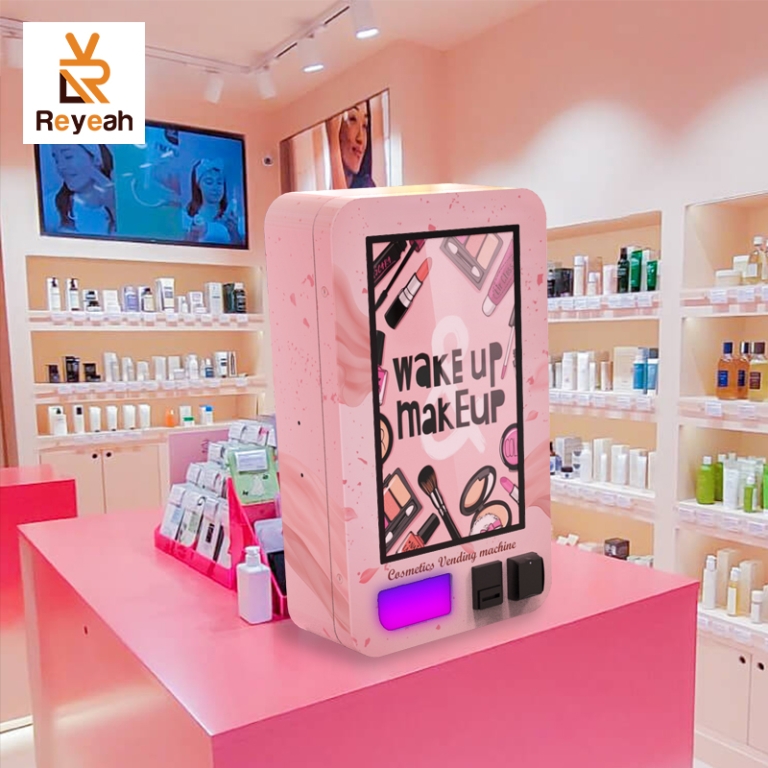

A customized vending machine starts with a simple question: what, exactly, does it need to sell? A lipstick carton, a soft pouch and a boxed collectible may fit within the same cabinet dimensions, yet behave very differently on the way to the collection tray.
The artwork is usually the easiest part of the project to picture. The harder decisions sit behind it: how products move, how payment connects to a completed sale, and how someone will refill the machine on a busy afternoon. Settle those details before approving the exterior, and the quotation becomes much easier to assess.
Start with the package you will actually sell
Send your supplier finished retail samples, including any sleeves, security labels or outer wrapping. A bare product and its sale-ready package are not interchangeable. A loose flap can catch on a guide; a rounded bottle can roll after release; a light pouch can fold where a rigid carton stays upright.
For each item, record its width, depth, height and weight in the intended loading position. Identify which products must launch together and which are only possible additions. This prevents an unlikely future product from dictating the entire machine.
Ask for the proposed layout to show both the number of selections and the quantity behind each selection. “Capacity: 100 items” is difficult to use unless it refers to your packaging. Ten choices with ten units each create a different restocking problem from two choices with fifty units each.
Decide how much customization you need
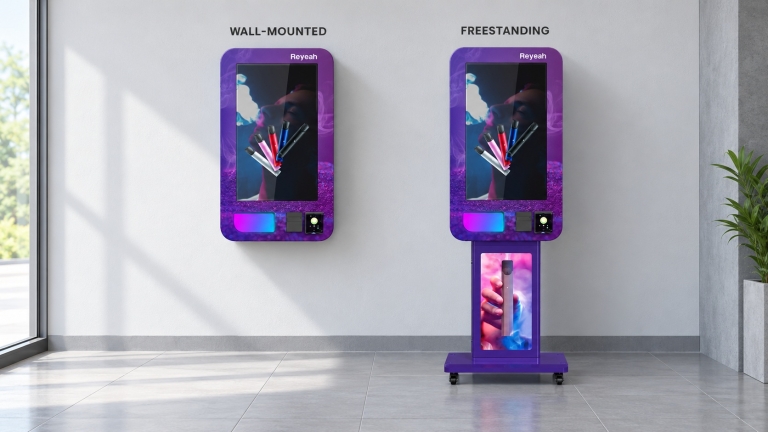
There is a substantial difference between putting your branding on an existing machine and commissioning a new cabinet or dispensing arrangement. Before requesting a completely new design, check whether an existing platform can accommodate the product and location.
| Area | Details to specify | Evidence to request |
|---|---|---|
| Appearance | Artwork, colors, illuminated areas and screen graphics | Artwork proof with dimensions and material information |
| Product handling | Package range, channel layout and collection method | Repeated dispensing tests using finished samples |
| Payment | Operating country, currency and intended payment methods | Exact terminal configuration and local activation requirements |
| Software | Languages, product setup, reporting and user access | A demonstration of the functions included in the quote |
| Installation | Cabinet size, mounting, power and service clearance | Dimensioned installation drawing |
A useful quotation separates standard equipment, optional accessories and development work. It should also say whether a requested change affects minimum order quantity, sample cost or production timing. Otherwise, two prices may describe quite different projects.
Choose the dispensing method around the product
Ask the supplier to explain the proposed mechanism in terms of your products. What supports the item before release? What keeps the next unit in place? How far does the purchased item travel, and what happens when it reaches the collection area?
Fragile packaging deserves particular attention. A product can arrive at the collection tray and still be unsuitable for sale if the carton is crushed or its contents are damaged. Include package condition in the acceptance criteria, alongside delivery of the correct item.
Confirm payments for the destination country
“Cashless ready” leaves several questions unanswered. Specify where the machine will operate, which currency it will display and which payment methods customers should be able to use. Then confirm the terminal model, merchant setup, connectivity and ongoing charges with the relevant provider.
Include unsuccessful purchases in the demonstration. Ask what the customer sees if authorization fails, if the connection drops, or if payment is approved but the item does not arrive. Establish how the operator identifies the transaction and handles the customer’s request for help.
Our guide to vending machine payment options covers the questions to raise when comparing cash, card and mobile payment configurations. The final choice still needs to be checked against your machine and market.
Make the screen and cabinet work together
A customer standing in front of the machine should be able to connect the product shown on screen with the item they will receive. Give similar variants distinct names and photographs. Keep the price visible before payment, and make the collection point easy to find.
Review artwork at its finished size. A logo that looks balanced on a laptop may be obscured by the payment terminal or door hardware. Check where panel joints, locks, ventilation openings and service labels sit before signing off the print file.
For multilingual interfaces, review the whole purchase sequence in each language, including error messages. Translated product names alone do not help someone who gets stuck at checkout.
Plan the refill visit before fixing the cabinet size
Measure the delivery route as well as the final location. Doorways, corners and lifts can decide whether a machine reaches its intended position. At the installation point, allow for the open service door and the person working in front of it.
Picture a normal refill: the operator arrives with stock, unlocks the machine, checks remaining units, loads products and closes up. Where do the stock boxes go? Can the operator reach every channel? Can a serviceable component be removed without dismantling unrelated parts?
Request a demonstration of stock updates and sales reporting if these functions are included. Clarify whether stock levels come from a calculated count, a sensor or manual entry, and how an incorrect count is corrected. Those details determine how much confidence to place in a remote refill alert.
Agree on acceptance before production
Write down the approved package list, layout, artwork version, payment configuration, software functions and installation requirements. Add the agreed test procedure and what happens if a test fails. This gives both sides a shared reference when the sample is reviewed.
Also confirm the handover: operating instructions, parts identification, warranty terms, support contact and any account access needed to run the machine. Ask which replacement parts can be ordered separately and whether a later product change requires new hardware.
For a first deployment, a pilot machine can help expose issues with the location and refill routine before you repeat the configuration across several sites. Its value comes from recording what happens and making specific changes.
What to send with your inquiry
A useful brief includes product photographs and dimensions, available samples, destination country, proposed location, expected order quantity and preferred payment methods. Add a sketch or photographs of the installation area, plus the branding files if they are ready.
Browse Reyeah’s vending machine range to identify a possible starting format, then send the team your project brief. Ask for the proposed configuration and any items that still need testing to be listed separately. That is a much firmer basis for ordering a customized vending machine than a front-view rendering alone.